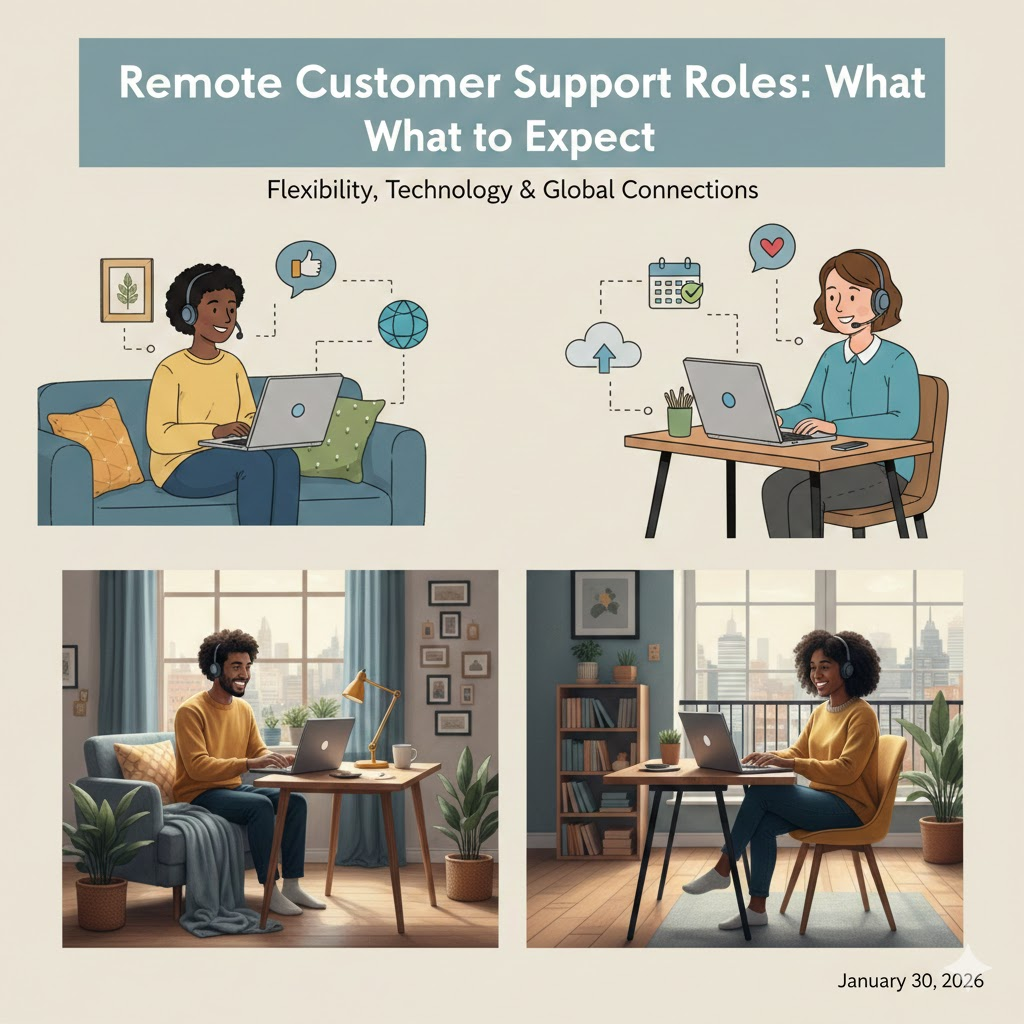
Customer support is one of the most accessible and in-demand remote jobs worldwide. Many companies now hire fully remote support staff to assist customers via phone, chat, or email. While these roles can be rewarding, they come with their own expectations, challenges, and skill requirements. Understanding what to expect is essential if you want to succeed in a remote customer support career.
What Remote Customer Support Involves
Remote customer support representatives handle inquiries, solve problems, and ensure customer satisfaction without being physically present in an office. Common tasks include:
- Responding to customer emails, chats, or social media messages
- Answering support calls or video calls
- Troubleshooting technical issues or product questions
- Logging interactions and updating customer records
- Escalating complex issues to specialized teams
- Providing feedback on recurring problems to improve services
The main goal is to ensure customers feel heard, helped, and satisfied while maintaining efficiency and professionalism.
Types of Remote Customer Support Roles
- Live Chat Support
Communicate with customers in real time through chat windows on websites or apps. Speedy typing and clear communication are key. - Email Support
Respond to customer emails thoughtfully and professionally. Written communication and attention to detail matter most. - Phone Support
Handle calls to resolve issues, requiring a calm voice, active listening, and problem-solving skills. - Social Media Support
Manage comments, direct messages, and inquiries on platforms like Twitter, Facebook, or Instagram. Quick, polite responses are crucial. - Technical Support
Assist users with troubleshooting software, apps, or devices. This may require basic technical knowledge and the ability to follow scripts or documentation.
Skills Required for Remote Customer Support
While you don’t always need a college degree, certain skills make success more likely:
- Communication Skills: Clear, polite, and concise writing or speaking.
- Problem-Solving Ability: Think quickly and offer helpful solutions.
- Empathy: Understand customer concerns and respond with patience.
- Time Management: Handle multiple tickets or chats efficiently.
- Technical Literacy: Comfortable with software tools, CRMs, and basic troubleshooting.
- Adaptability: Follow changing scripts, policies, and customer needs.
Tools You Will Commonly Use
Remote support roles often require familiarity with digital tools:
- Customer Relationship Management (CRM) Software: Zendesk, Salesforce, Freshdesk
- Communication Platforms: Slack, Microsoft Teams, Zoom
- Ticket Management Systems: Helps organize, assign, and track customer queries
- Knowledge Bases: Internal documentation to provide accurate answers quickly
Being comfortable with learning new tools is part of the job.
Work Schedule and Flexibility
Many remote support roles offer flexible schedules, including evening or weekend shifts. Some companies operate 24/7, which creates opportunities for different time zones.
However, you may need to commit to a structured shift to ensure consistent coverage. Unlike freelance jobs, most remote support roles are either full-time or part-time with fixed hours.
Challenges of Remote Customer Support
While remote support is convenient, there are some challenges:
- High Volume and Repetition: Handling multiple inquiries quickly can be stressful.
- Dealing with Difficult Customers: Patience and emotional control are essential.
- Isolation: Working remotely means less in-person team interaction. Communication and social breaks are important to avoid burnout.
- Performance Monitoring: Many companies track metrics like response time, resolution rate, and customer satisfaction.
Rewards and Opportunities
Despite challenges, remote customer support offers several benefits:
- Entry-Level Friendly: Many companies hire candidates without degrees if they have strong communication skills.
- Career Growth: Opportunities to move into team lead, training, quality assurance, or customer success roles.
- Skill Development: Enhances problem-solving, multitasking, and digital communication skills.
- Flexibility: Work from home or anywhere with internet access.
Tips to Succeed in Remote Customer Support
- Set Up a Professional Workspace: Quiet space, reliable internet, and good headset.
- Stay Organized: Use task lists or calendars to track tickets or follow-ups.
- Communicate Proactively: Keep supervisors and colleagues updated on issues or delays.
- Develop Emotional Resilience: Learn to manage stress and avoid taking difficult interactions personally.
- Continuously Learn: Stay updated on product knowledge, new support tools, and customer service techniques.
Frequently Asked Questions
Do I need a college degree to work in remote customer support?
No. Many companies hire based on communication skills, reliability, and problem-solving ability rather than formal education.
Can I work part-time?
Yes. Many companies offer part-time or flexible shifts, which makes it ideal for students, parents, or those with other commitments.
What equipment do I need?
Typically, a computer, reliable internet, a headset with a microphone, and sometimes a quiet home workspace are required.
Is it stressful?
It can be, especially during high volume periods or when dealing with difficult customers. Emotional resilience and organization help reduce stress.
How can I grow in this career?
With experience, you can move into advanced roles like customer success manager, support trainer, team lead, or product specialist.
Remote customer support is a great entry point into the world of remote work. It provides stable income, valuable transferable skills, and flexibility, making it ideal for people looking to work from home without a college degree. By understanding the role, developing key skills, and maintaining a healthy work-life balance, you can build a successful remote career in customer support.