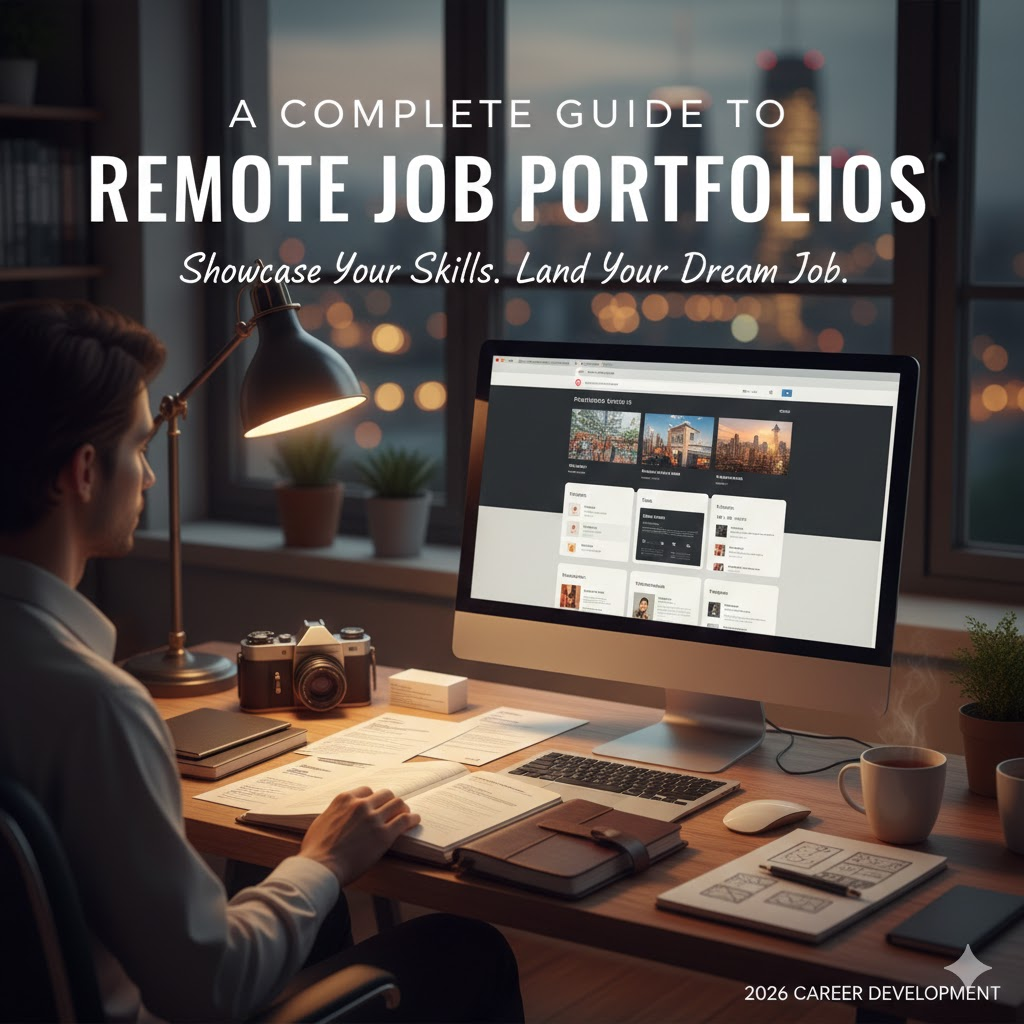
In the remote job world, your portfolio often matters more than your resume. Employers hiring remotely want proof that you can work independently, communicate clearly, and deliver results without constant supervision. A strong remote job portfolio does exactly that—it shows what you can do, how you think, and how you work.
Whether you are a developer, designer, writer, marketer, analyst, or any other remote professional, a well-crafted portfolio can significantly improve your chances of landing quality opportunities.
This guide explains what a remote job portfolio is, why it matters, and how to build one that actually gets attention.
What Is a Remote Job Portfolio?
A remote job portfolio is a curated collection of your work samples, projects, and professional context designed specifically for remote roles.
Unlike a traditional portfolio, it highlights:
- Results and outcomes, not just tasks
- Independent work and problem-solving skills
- Communication clarity and documentation
- Ability to work asynchronously
It answers one core question for employers: Can this person deliver reliably without being in an office?
Why Remote Job Portfolios Matter More Than Ever
Remote hiring managers often receive hundreds of applications. They have limited time and rely heavily on proof over promises.
A strong portfolio:
- Builds instant credibility
- Reduces hiring risk
- Shows initiative and professionalism
- Sets you apart from resume-only applicants
In remote work, demonstration beats explanation every time.
What Should a Remote Job Portfolio Include?
1. A Clear Introduction
Start with a short, human introduction:
- Who you are
- What you do
- What type of remote work you are looking for
Keep it simple and focused. Avoid generic buzzwords.
2. Selected Work Samples
Quality matters more than quantity.
Include:
- 3–6 of your strongest projects
- Work relevant to the role you want
- Clear explanations of your contribution
For each project, explain:
- The problem
- Your approach
- Tools or skills used
- Results or impact
This context is critical for remote roles.
3. Case Studies Over Screenshots
Case studies are powerful for remote hiring.
A good case study shows:
- How you think
- How you make decisions
- How you solve problems
Even simple projects can become strong case studies when explained clearly.
4. Proof of Remote Skills
Remote work requires more than technical ability.
Show evidence of:
- Written communication skills
- Time management and organization
- Collaboration using remote tools
Examples include documentation, planning boards, reports, or client feedback.
5. Tools and Tech Stack
Clearly list the tools you are comfortable using:
- Communication tools
- Project management platforms
- Technical or creative software
This helps employers quickly assess compatibility with their workflows.
6. Testimonials or References
If available, include:
- Client testimonials
- Manager feedback
- LinkedIn recommendations
Social proof builds trust, especially in remote hiring.
Choosing the Right Platform for Your Portfolio
Your portfolio should be easy to access and navigate.
Popular options include:
- Personal website
- GitHub or GitLab for developers
- Notion or similar tools for documentation-heavy roles
- PDF portfolios for creative fields
Choose a format that matches your role and keeps the experience simple.
How to Tailor Your Portfolio for Remote Roles
One-size-fits-all portfolios often underperform.
Tailor your portfolio by:
- Highlighting relevant projects first
- Adjusting descriptions for different roles
- Removing unrelated or outdated work
A focused portfolio signals intention and professionalism.
Common Mistakes to Avoid
- Including too many projects
- Failing to explain your role in team work
- Using vague descriptions
- Ignoring mobile or accessibility issues
- Not updating your portfolio regularly
Your portfolio should evolve as your skills and goals evolve.
How Often Should You Update Your Portfolio?
Update your portfolio:
- After completing significant projects
- When changing career direction
- Before applying to new roles
Fresh content shows growth and keeps your work relevant.
Remote Job Portfolios for Different Roles
Developers
Focus on clean code, documentation, and problem-solving logic.
Designers
Show process, iterations, and reasoning—not just final visuals.
Writers and Marketers
Include metrics, strategy explanations, and audience impact.
Analysts and Data Roles
Highlight insights, decision-making, and real-world outcomes.
Frequently Asked Questions
Do I need a portfolio for every remote job?
Not always, but having one greatly increases your chances, especially for competitive roles.
Can beginners create a strong portfolio?
Yes. Personal projects, mock assignments, and open-source contributions work well when explained clearly.
Should I include unpaid or practice work?
Yes, as long as it demonstrates real skills and effort.
How long should a portfolio take to review?
Ideally, a hiring manager should understand your value within five minutes.
Is a resume still necessary?
Yes. Your resume gets attention, but your portfolio closes the gap.
Final Thoughts
A remote job portfolio is more than a collection of work—it is a story of how you operate in a remote environment.
It shows your skills, thinking process, communication style, and reliability. In a world where employers may never meet you in person, your portfolio becomes your strongest professional representation.
You do not need to be perfect. You need to be clear, honest, and intentional. Start with what you have, improve as you grow, and let your work speak for itself.