Digital marketing has become an essential skill in today’s online-driven world. Whether you want to start a remote career, promote your own business, or freelance for clients, learning digital marketing opens up countless opportunities. The good news is you don’t need prior experience to get started with the right roadmap, anyone can learn digital marketing from scratch.
Here’s a step-by-step guide to building your skills and becoming confident in digital marketing.
1. Understand What Digital Marketing Is
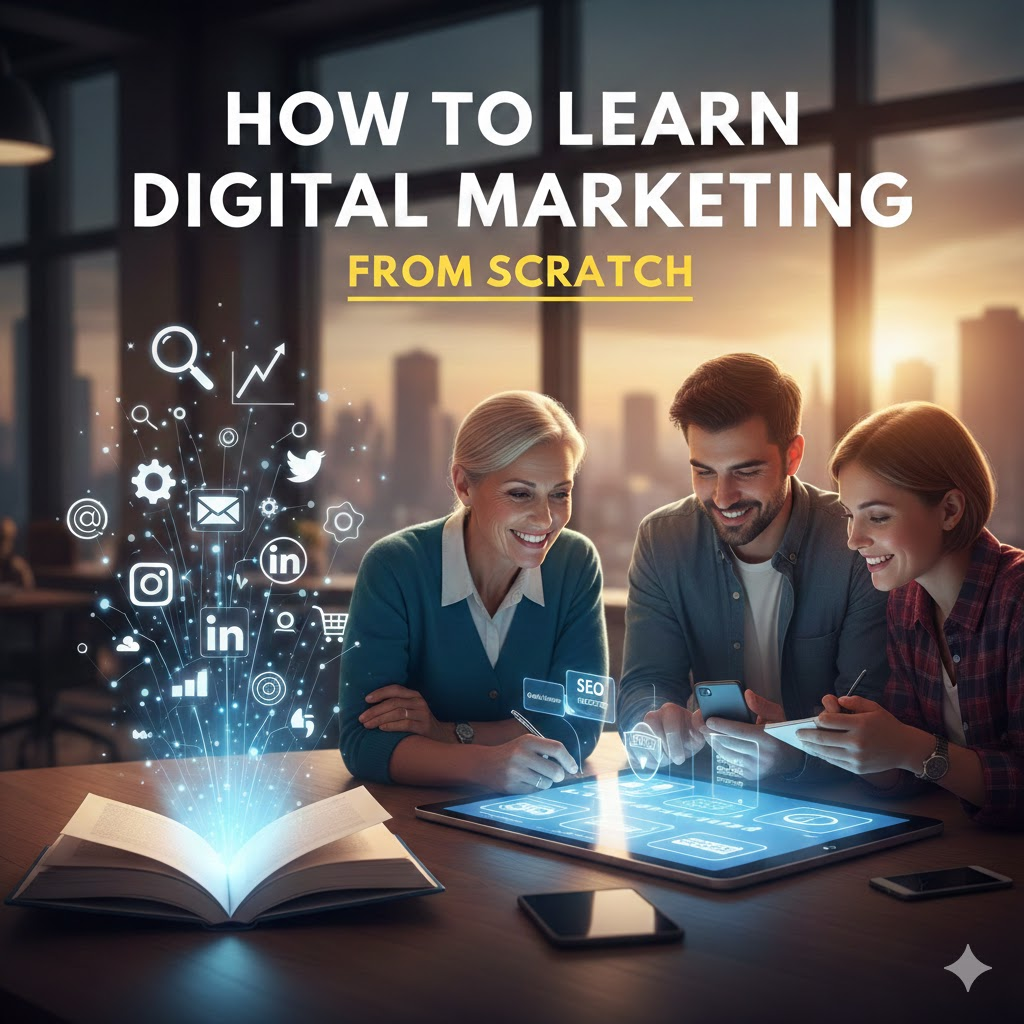
Before diving in, it’s important to grasp the basics. Digital marketing is any form of marketing that uses digital channels to reach audiences. This includes:
- Search Engine Optimization (SEO): Optimizing content to rank higher on search engines.
- Content Marketing: Creating articles, videos, or infographics that educate and attract customers.
- Social Media Marketing: Promoting products or services on platforms like Instagram, LinkedIn, and Facebook.
- Email Marketing: Sending targeted emails to nurture leads or drive sales.
- Pay-Per-Click Advertising (PPC): Paid ads on Google or social media.
- Analytics: Measuring performance and making data-driven decisions.
Understanding these core areas will help you see the bigger picture before learning each skill in detail.
2. Start with Free Beginner-Friendly Courses
Free courses are a great way to get your feet wet without any financial risk. They introduce key concepts, tools, and strategies used in the industry.
Recommended Free Courses:
- Google Digital Garage – Fundamentals of Digital Marketing: Covers SEO, social media, and analytics with a certificate.
- HubSpot Academy – Inbound Marketing & Social Media Certification: Focuses on attracting and engaging customers online.
- Coursera – Digital Marketing Specializations (Free Audit Option): Provides foundational knowledge with real-world examples.
These courses give you a structured approach and hands-on exercises to apply what you learn immediately.
3. Learn SEO and Content Marketing
SEO and content marketing are the backbone of online visibility. Learning them helps you attract traffic and build credibility.
Key Steps:
- Learn keyword research using tools like Ubersuggest, Ahrefs (trial), or Google Keyword Planner.
- Understand on-page SEO: meta tags, headings, URL structure, and internal linking.
- Create a blog or website to practice writing and optimizing content.
- Learn basic analytics to measure performance (Google Analytics is essential).
SEO skills allow you to drive organic traffic, which is valuable for freelance work, agencies, or your own projects.
4. Explore Social Media Marketing
Social media is where brands connect directly with audiences. Social media marketing requires creativity, strategy, and analytics.
Focus Areas:
- Creating content calendars and posting consistently.
- Understanding platform-specific strategies (Instagram, LinkedIn, TikTok).
- Learning basic design tools like Canva to create visuals.
- Using analytics to track engagement, reach, and conversions.
HubSpot and LinkedIn Learning offer beginner-friendly courses for social media strategy and execution.
5. Get Hands-On with Paid Ads (PPC)
Paid advertising allows businesses to get quick results and reach specific audiences. Learning PPC adds another valuable skill to your toolkit.
Focus Areas:
- Google Ads basics: search, display, and shopping campaigns.
- Social media advertising: Facebook Ads Manager, Instagram campaigns, LinkedIn Ads.
- Budgeting, bidding strategies, and ad optimization.
- Measuring ROI and analytics to improve campaigns.
Start with small personal projects or simulations before offering paid services to clients.
6. Learn Email Marketing and Automation
Email marketing is highly effective for lead generation and retention. Learning this skill allows you to create campaigns that nurture prospects and convert leads.
Focus Areas:
- Using tools like Mailchimp, Klaviyo, or ActiveCampaign.
- Building email sequences and automated workflows.
- Writing engaging subject lines and persuasive copy.
- Analyzing open rates, click-through rates, and conversions.
Email marketing courses from HubSpot Academy or Udemy provide hands-on practice.
7. Build a Portfolio
Theory alone won’t make you job-ready. Create practical projects that demonstrate your skills:
- Start a blog and apply SEO techniques.
- Manage a small social media account and track engagement.
- Create sample PPC campaigns with mock budgets.
- Design a newsletter or email campaign.
A portfolio gives employers or clients tangible proof of your abilities and sets you apart from other candidates.
8. Stay Updated and Practice Continuously
Digital marketing is constantly evolving. New tools, algorithms, and trends emerge regularly. To stay competitive:
- Follow digital marketing blogs and communities (Moz, Neil Patel, HubSpot).
- Join online forums and LinkedIn groups to network and learn.
- Experiment with small projects to test strategies.
- Track metrics and optimize campaigns based on results.
Consistency and hands-on experience are more important than memorizing theory.
Frequently Asked Questions (FAQ)
Do I need a degree to learn digital marketing?
No. Digital marketing is a skills-based field. Practical experience, certifications, and a portfolio matter more than a formal degree.
How long does it take to learn digital marketing from scratch?
You can learn the basics in 1–2 months, but building proficiency and a portfolio may take 3–6 months depending on effort.
Which skills should I start with?
Begin with SEO and content marketing, then move to social media, email, and PPC. These skills complement each other and provide a strong foundation.
Are free courses enough to get a remote job?
Yes, if you supplement learning with hands-on projects and a portfolio. Paid courses may offer advanced knowledge and certifications, but free courses are sufficient to start.
Can I freelance as a digital marketer after learning from scratch?
Absolutely. Many freelancers start with small projects such as managing social media, creating content, or running small ad campaigns. Portfolio projects help attract clients.
Conclusion
Learning digital marketing from scratch is entirely achievable with the right roadmap. Start with the fundamentals, practice each area, and gradually build a portfolio of real projects. Focus on SEO, content marketing, social media, PPC, and email marketing to become job-ready.
With persistence, hands-on practice, and continuous learning, you can turn digital marketing skills into a remote career, freelance income, or even your own online business.