


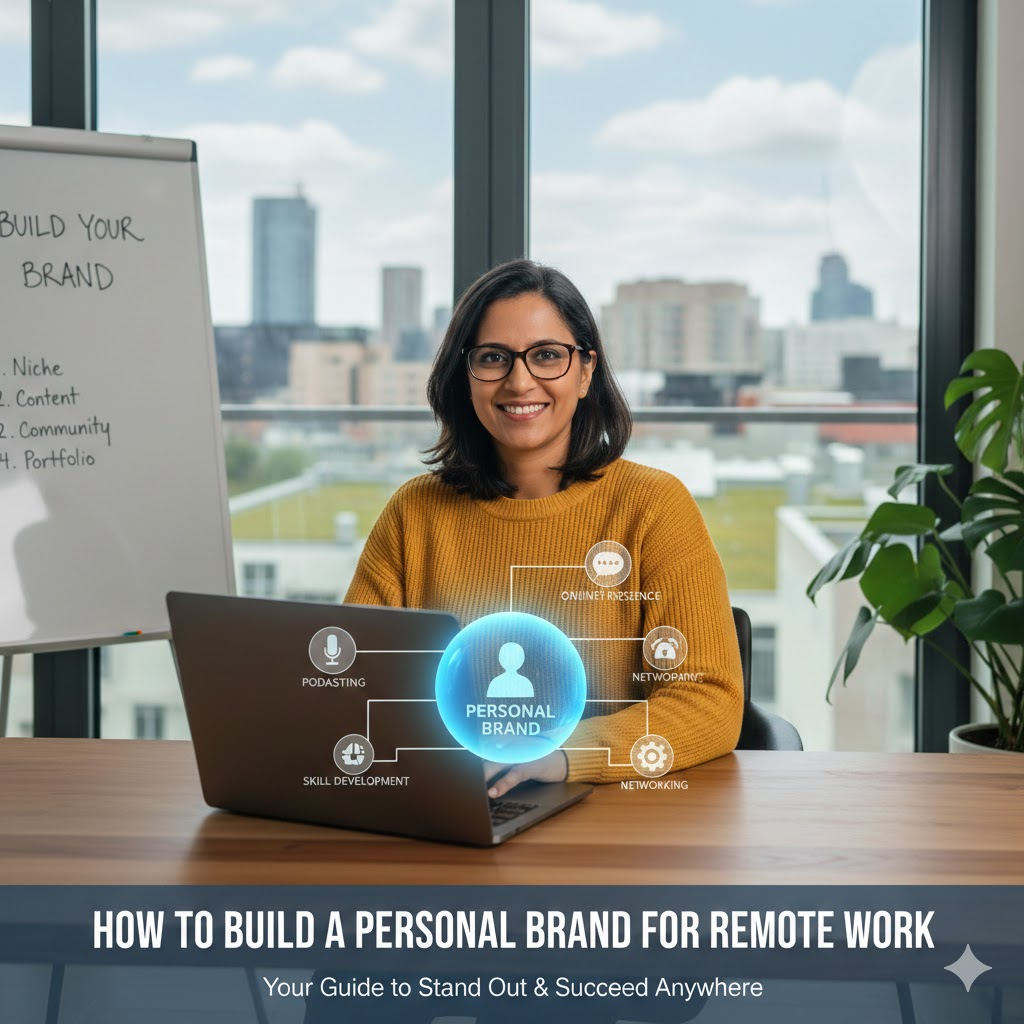
Remote work has changed how companies hire—but it has also changed how professionals need to show up. When you’re not visible in an office, your personal brand becomes your presence. It tells employers who you are, how you work, and whether they can trust you—before they ever speak to you.
If you want consistent remote opportunities, better interviews, and stronger salary offers, building a personal brand is no longer optional. It’s a career skill.
This guide breaks down how to do it practically, with insights from real remote workers.
What Personal Branding Means in Remote Work
Personal branding isn’t about being famous online. It’s about clarity and credibility.
In a remote context, your personal brand answers three questions for hiring managers:
- What problem do you solve?
- Can you work independently without constant supervision?
- Do you have proof of results?
Remote employers don’t hire based on proximity. They hire based on trust.
Define Your Remote Value Clearly
Before updating your LinkedIn or portfolio, get specific about what you offer.
Vague roles don’t stand out in global hiring pools. Clear positioning does.
Instead of saying:
“I work in marketing”
Say:
“I help SaaS companies grow organic leads through SEO-focused content”
This clarity helps recruiters understand your value instantly—and helps you attract roles that actually fit your skills.
Ask yourself:
- Who do I help?
- What problem do I solve?
- What outcome do I consistently deliver?
Your answers form the foundation of your personal brand.
Build Proof That Speaks for You
Remote companies care more about evidence than promises.
Strong personal brands are built on:
- Case studies
- Work samples
- Measurable results
- Clear explanations of how work was done
Many remote professionals land roles simply by sharing how they approach their work. One remote developer regularly posted short breakdowns of problems he solved for clients. Those posts led to freelance and full-time offers—without formal applications.
If people can see how you think and work, trust builds naturally.
Use LinkedIn as a Living Portfolio
For remote hiring, LinkedIn often replaces the traditional resume.
Focus on:
- A headline that clearly states your role and impact
- An About section written in simple, direct language
- Experience sections that highlight outcomes, not tasks
- Featured links to real work, articles, or projects
Recruiters often scan profiles quickly. Make your value obvious within the first few seconds.
Share Your Knowledge Consistently
You don’t need to post daily or chase trends. You need to be useful.
Remote workers who attract opportunities often share:
- Lessons from recent projects
- Tools that improved their workflow
- Mistakes they learned from
- How they collaborate across time zones
A remote operations lead shared how she manages async communication across teams. That post later came up in interviews and helped position her as a leader—even without a management title.
Small insights build long-term credibility.
Show Remote-Ready Skills in Interviews
Your personal brand must hold up when interviews begin.
Remote interviewers look for:
- Clear and structured communication
- Ownership and accountability
- Comfort with documentation and async work
- Ability to manage time independently
In interviews:
- Explain how you track progress
- Talk about how you communicate without meetings
- Share examples of working across time zones
Remote experience isn’t just where you worked—it’s how you worked.
Personal Branding and Salary Growth
A strong personal brand doesn’t just get interviews. It improves pay.
Remote professionals with clear positioning often:
- Attract inbound opportunities
- Negotiate from a stronger position
- Avoid low-paying job boards
- Compete globally instead of locally
Many remote workers report salary jumps of 20–40% after refining their niche and making their work visible online. When companies understand your impact, salary discussions become easier.
Learn From Real Remote Workers
The most successful remote professionals don’t wait to be noticed. They document their journey.
They share:
- What they’re learning
- What’s working
- What’s challenging
Not perfectly. Just honestly.
Over time, this creates a reputation that works for them—quietly and consistently.
Final Thoughts
Building a personal brand for remote work isn’t about self-promotion. It’s about reducing uncertainty.
When employers can clearly see:
- What you do
- How you work
- Why they can trust you remotely
You stop being just another applicant and start becoming an obvious choice.
Remote work rewards clarity, consistency, and proof. Build your brand with those principles—and the right opportunities will find you.