


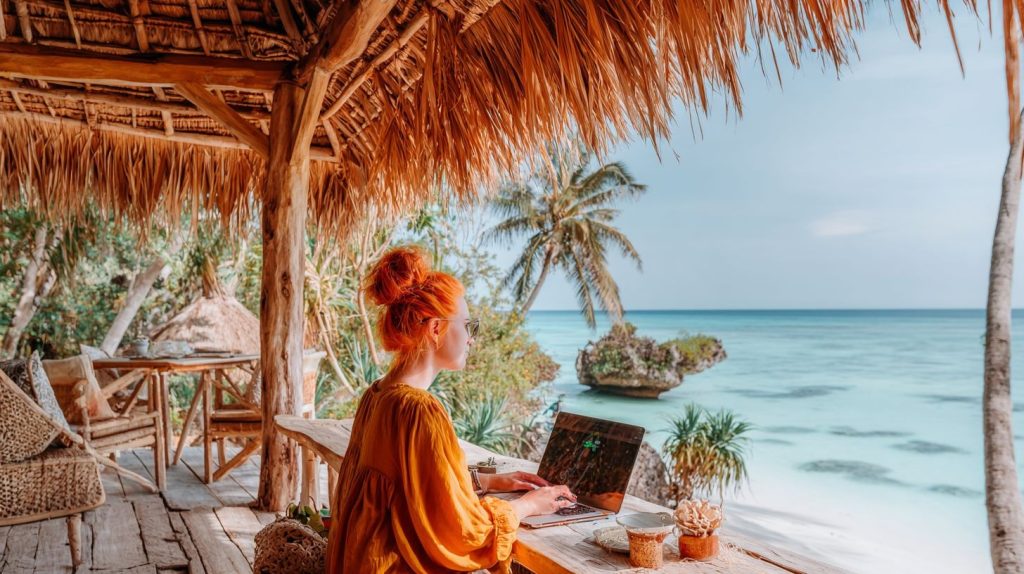
Imagine trading your desk for a beachside cafe in Bali or a mountain lodge in the Alps, all while earning a steady income. The digital nomad revolution, fueled by a 2023 MBO Partners study showing over 17 million Americans embracing location-independent work, makes this possible.
Discover top jobs-from freelance writing and software engineering to dropshipping and online coaching-plus essential tools, skills, and startup tips to launch your freedom-filled career.
What is a Digital Nomad?
A digital nomad works remotely using a laptop and internet from anywhere, averaging 4.2 country moves yearly per Nomad List data. They embrace a laptop lifestyle that blends work with travel. This setup allows for location independent careers free from traditional office constraints.
Real examples highlight this path. Tim Ferriss, author of The 4-Hour Workweek, has lived in 50+ countries while building his brand. Pieter Levels, founder of Nomad List, earns over $1M yearly as a solo developer traveling the world. Programs like Remote Year gather 300+ nomads monthly for structured global adventures.
The lifestyle breaks down into key pursuits. About 60% freelance in roles like content writer or graphic designer. Roughly 25% entrepreneurship covers online businesses such as dropshipping or affiliate marketing. The rest, around 15% remote employees, handle tasks like virtual assistant or customer support from afar.
Daily life involves co-working spaces, cafes, or beach offices with reliable internet and VPN tools. They manage time zones via apps like Slack and Zoom. This fosters work-life balance, cultural immersion, and travel freedom in the nomad life.
Benefits of Location-Independent Work
Digital nomads save $12,000+ annually on rent and commuting while gaining 52% higher life satisfaction according to MBO Partners 2023. This shift to location-independent work opens doors to a flexible lifestyle. Workers embrace the laptop lifestyle from beaches or cafes.
One key benefit is cost savings of about $1,200 per month. Remote jobs cut expenses on housing and transport. Freelancers like content writers or graphic designers redirect funds to travel or investments.
Another advantage is freedom, with around 180 work days versus 250 in traditional roles. This allows more time for adventure travel and personal pursuits. Digital entrepreneurs enjoy flexible hours and work-life balance.
Nomads often visit 12 countries per year, gaining rich experiences and cultural immersion. Roles such as virtual assistant or digital marketer fit this mobile path. They build skills in time zone management while exploring.
Health improves with 40% less stress from no commute and natural settings. Experts recommend productivity apps like Trello for focus. Networking expands to 500+ global contacts via platforms like Upwork.
Suggestion: Include an infographic here showing icons for each benefit, such as a wallet for savings, a globe for travel, and a heart for health, arranged in a circular layout for quick visual impact.
Essential Requirements for Success
Success requires 50Mbps+ internet, $50/mo VPN, and time zone tools like World Time Buddy. These basics ensure you stay connected for remote jobs no matter where you roam. Without them, your laptop lifestyle could grind to a halt mid-project.
Reliable internet tops the list, tested via Speedtest by Ookla for consistent speeds. Aim for fiber optic in cafes or co-working spaces to handle video calls on Zoom. Backup with mobile hotspots for beach office setups during travel.
Invest in solid hardware like the MacBook Air M2 for all-day battery and power. Pair it with a VPN such as ExpressVPN at $8.32/mo to secure data on public WiFi. Add cloud backups via Google Drive 2TB for $10/mo to protect client files from loss.
- Nomad insurance like SafetyWing at $42/mo covers health on the road for unexpected issues.
- Multi-currency banking with Wise handles international payments without fees.
- Digital nomad communities via Nomad List Premium at $299/yr connect you to co-working spaces and advice.
Master time zone management to align with global clients as a virtual assistant or web developer. Use productivity apps like Trello and Slack for async communication. These tools support your borderless career and prevent burnout in the nomad life.
Top Freelance Jobs
Freelance jobs dominate digital nomad work, with Upwork reporting 12M freelancers earning $3.8B annually. Platforms like Fiverr and Upwork connect location independent workers to global clients, offering flexible hours and travel freedom. This borderless career path suits solopreneurs seeking laptop lifestyle.
The freelance market grows with demand for remote jobs in writing, design, and coding. Digital nomads thrive using productivity apps like Trello and Asana for time zone management. Transition to high-demand roles below for work from anywhere.
Experts recommend building niche expertise on these platforms. Start with client acquisition scripts and strong portfolios. Enjoy cafe workspaces or beach offices while scaling your online business.
Freelance Writing and Copywriting
Freelance writers earn $50-$250/hour on Upwork, with top earners hitting $10k/month serving SaaS and e-commerce clients. Beginners charge $30/hr, mid-level $75/hr, and experts $150+/hr. Platforms like Upwork, Contently, and ProBlogger list millions of gigs.
Master skills in SEO using Ahrefs and Grammarly Pro at $12/mo. Niches pay well, like SaaS posts at $2k each or e-commerce copy at $1.5k/post. Focus on content writer roles for steady remote income.
Acquire clients with this script: “Hi [Name], I specialize in [niche] copy that converts. Here’s a sample boosting sales 2x. Available for your project?” Build a portfolio of blog posts and emails. This supports nomad life with flexible hours.
Join digital nomad communities on Nomad List for tips. Use Google Workspace for collaboration. Maintain work-life balance amid cultural immersion.
Graphic Design and Illustration
Graphic designers command $40-$150/hour creating logos, social graphics, and branding for small businesses. Charge $500-$2k for logos and $300 for social packs of 10 posts. Niches like NFT art at $1k/piece or course graphics at $800/package attract global clients.
Essential tools include Adobe Creative Cloud at $52.99/mo, Figma from free to $12/mo, and Canva Pro at $12.99/mo. Showcase work on Dribbble and Behance portfolios. These platforms draw remote jobs for location independent creators.
Target digital marketers needing visuals for social media. Start with simple gigs like infographics, then scale to full branding. Use Slack for async communication with international teams.
Embrace the wifi warrior lifestyle in co-working spaces. Track projects with invoicing apps. This path offers perpetual traveler freedom and passive income potential.
Web Development and Coding
Web developers earn $60-$200/hour building sites with WordPress and custom JavaScript frameworks. Price projects like landing pages at $1.5k, e-commerce at $5k+, and SaaS MVPs at $15k. Platforms Toptal for top 3% talent and Codeable for WordPress experts connect you to high-paying gigs.
Key tech stacks: WordPress + Elementor at $49/yr, React/Next.js, and headless CMS. Build a GitHub portfolio with clean code, README files, and live demos. Highlight app developer or programmer skills for remote work.
Share repositories publicly and link them in proposals. Include case studies showing site speed improvements. This attracts software engineer roles in the global workforce.
Manage virtual teams with Zoom and time tracking tools. Optimize for reliable internet and VPNs on the road. Enjoy no commute, rent savings, and adventure travel as a digital entrepreneur.
Remote Tech and Development Roles
Tech roles offer some of the highest salaries for digital nomads, often ranging from $80k to $250k per year. Many positions allow you to work from anywhere with just a laptop and reliable internet. Companies like GitLab and Basecamp lead as fully remote-first organizations.
These firms hire globally and prioritize async communication over rigid schedules. This setup suits the nomad life, letting you manage time zones from beach offices or cafe workspaces. Transitioning to roles here means building skills in demand worldwide.
Job boards like Remote.co and We Work Remotely list thousands of openings. Focus on location independent tech stacks to stand out. Experts recommend starting with freelance gigs to gain experience before full-time remote jobs.
Common paths include software engineering, app development, and UI/UX design. Each offers flexible hours and travel freedom. Prepare for interviews that test real-world problem-solving in cloud environments.
Software Engineering
Remote software engineers average $142k/year building SaaS apps with AWS, Docker, and TypeScript. These roles let digital nomads code from co-working spaces or mountain retreats. Demand stays high for backend expertise in scalable systems.
Search job boards like Remote.co, We Work Remotely, and AngelList for openings. Popular tech stacks include MERN, Python/Django, and Go for web services. Companies such as Zapier with over 600 remote workers and Automattic with 2,000 embrace fully distributed teams.
The interview process typically spans four rounds: coding challenges, system design, behavioral questions, and a CTO chat. Practice on platforms like LeetCode to prepare. Tailor your resume to highlight remote collaboration via Slack or GitHub.
- Negotiate salary by researching market rates on Glassdoor.
- Ask about async work policies and tools like Trello or Asana.
- Request equity or bonuses tied to performance, not location.
App Development
App developers earn $8k-$50k per project using Flutter or React Native for iOS/Android apps. These freelance projects fit the laptop lifestyle perfectly. Platforms like Upwork and AppFutura post numerous gigs monthly.
Start with free frameworks like Flutter, or go native with Swift and Kotlin. Build an MVP in 4-6 weeks, scaling to full apps in 12-16 weeks. No-code tools like Adalo and Bubble speed up prototyping for solopreneurs.
Monetize via freelance work, agencies, or indie launches on the App Store. Focus on niches like fintech or wellness apps for digital nomads. Use Fiverr to land initial clients and build your portfolio.
Track projects with time tracking apps for accurate invoicing. Deliver handoffs with clear documentation. This path supports passive income through app updates while you travel.
UI/UX Design
UI/UX designers charge $75-$200/hr creating Figma prototypes for SaaS and fintech products. Remote roles thrive in design-heavy companies like Linear, Vercel, and Stripe. These jobs enable borderless careers with cultural immersion.
Use tools like Figma for free team collaboration, Framer for interactions, and Adobe XD for polish. The process breaks down to research in one week, wireframes in one week, prototypes in two weeks, and handoff in three days. Build a portfolio with at least three case studies showing user flows.
Highlight remote-friendly skills like async feedback loops. Companies value designers who adapt to global time zones. Freelance on Upwork to test niches before full-time remote positions.
Maintain work-life balance with productivity apps like Notion. Join digital nomad communities on Nomad List for job leads. This role combines creativity with the freedom of perpetual travel.
Content Creation Careers
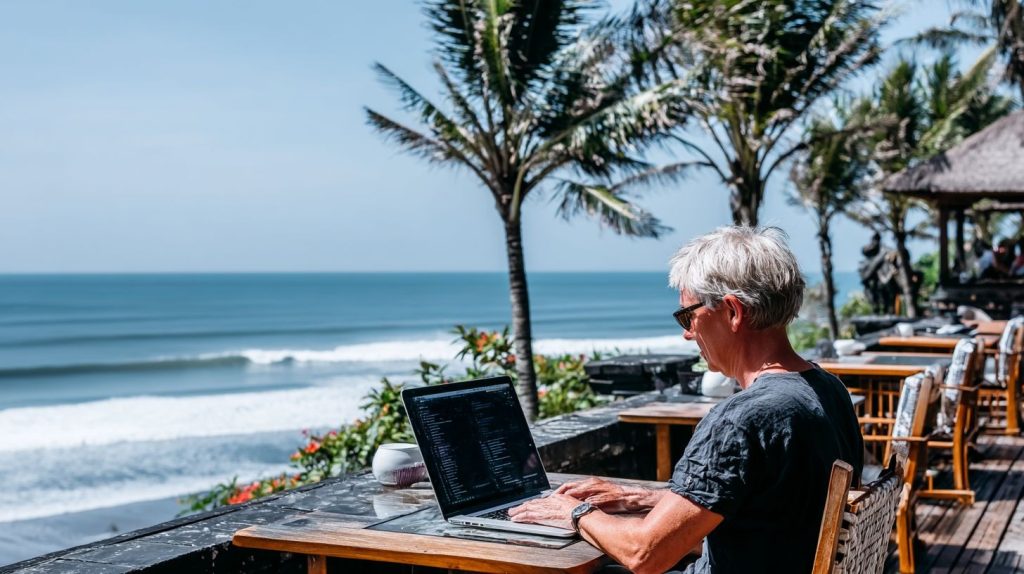
Content creators monetize audiences through ads, sponsorships, and products averaging $4k-$50k/month. The creator economy supports this with a $104B market full of opportunities for digital nomads. Platforms like YouTube, TikTok, and Instagram let you build a location independent career from anywhere.
Start by picking a niche that matches your passions, such as travel blogging or tech reviews. Use free tools like Canva for visuals and schedule posts with Buffer. Grow by posting consistently and engaging followers to boost visibility.
Monetize early with affiliate marketing or digital products like e-books. Transition to specific formats like blogging for SEO traffic or YouTube for video reach. This laptop lifestyle offers flexible hours and travel freedom for solopreneurs.
Experts recommend cross-promoting on multiple platforms to reach global audiences. Manage time zones with tools like Google Workspace and Trello. Join digital nomad communities on Nomad List for tips on reliable internet and co-working spaces.
Blogging and SEO Writing
Bloggers earn $2k-$20k/mo through SEO traffic and Amazon Associates (8% avg commission). Use a stack like WordPress + RankMath ($59/yr) and Ahrefs ($99/mo) to optimize posts. This setup suits digital nomads chasing a borderless career.
Build traffic with a strategy of 50 posts leading to 10k visitors/mo. Focus on niche selection by matching interests with demand, like van life or remote work visas. Monetize via display ads ($20/1k views) and affiliates ($50/sale).
| Niche | Pros | Cons |
| Travel | High engagement | Seasonal trends |
| Tech | Evergreen topics | Fast changes |
| Wellness | Loyal audience | High competition |
Example: A travel blog with 50k/mo visitors generates $5k revenue. Promote via social media and guest posts. Track progress with productivity apps like Asana for a balanced nomad life.
YouTube Content Creation
YouTube creators average $18/1k views via AdSense + sponsorships ($1k-$10k/deal). Tools like Final Cut Pro ($299), TubeBuddy ($9/mo), and VidIQ ($7.50/mo) streamline editing and optimization. Perfect for work from anywhere as a video editor or influencer.
Grow with 3 videos/wk and SEO titles targeting keywords like digital nomad jobs. Revenue streams include ads (55% RPM), affiliates, courses, and merch. Use Zoom for remote collaborations in different time zones.
Case study: A travel YouTuber with 100k subs earns $8k/mo. Batch film in cafes or beaches for that beach office vibe. Scale by analyzing analytics and joining creator communities for cross-promos.
Maintain work-life balance with async communication via Slack. Protect content with VPN tools during travel. This path supports passive income streams for perpetual travelers.
Podcasting and Audio Production
Podcasters earn $25-$50 CPM sponsorships with 5k+ downloads/episode. Tools like Riverside.fm ($19/mo), Descript ($12/mo), and Buzzsprout ($12/mo) make production easy. Ideal for podcast producers living the nomad life on sailboats or mountain retreats.
Launch with 10 episodes batch-recorded for quick momentum. Distribute on Spotify and Apple Podcasts. Grow through cross-promos with 5 similar shows in niches like online coaching or crypto trading.
Monetize via sponsorships, Patreon ($5-20 tiers), and listener support. Edit episodes on the go with cloud storage. Example: A digital nomad podcast builds a loyal audience sharing tips on ethical freelancing.
Prevent burnout with time tracking apps and digital detox breaks. Use invoicing tools for client payments in multi-currency accounts. This format offers flexible hours and cultural immersion for global podcasters.
Online Marketing Professions
Digital marketers drive ROI through paid ads and email averaging 42x return per HubSpot. They thrive in the $786B digital ad market, where businesses pour funds into online campaigns. This field suits digital nomads perfectly, offering fully remote work from anywhere.
Remote agencies are on the rise, hiring specialists who manage campaigns via cloud tools. Location-independent pros handle clients across time zones using productivity apps like Trello and Slack. This shift enables a laptop lifestyle with travel freedom.
Common roles include specialists optimizing ad spend, managers building social followings, and affiliates earning commissions. Freelancers find gigs on Upwork or Fiverr, while agencies offer steady retainers. These jobs demand creativity and data skills for borderless careers.
Experts recommend starting with niche expertise, like e-commerce or SaaS, to stand out. Build a portfolio showcasing real results to attract global clients. Embrace flexible hours for cafe workspaces or beach offices in your nomad life.
Digital Marketing Specialist
Digital marketers earn $60-$150/hr managing Google Ads ($300B spend) and SEO campaigns. They focus on channels like Google Ads, Facebook Ads, and LinkedIn Ads to boost client revenue. Tools such as Google Analytics 4 (free) and SEMrush ($129/mo) help track performance.
Key KPIs include ROAS 4x+ and CAC under $50, guiding campaign tweaks. E-commerce clients often see revenue lifts, while SaaS benefits from 3x LTV growth. Freelancers charge per project, agencies prefer retainers for steady income.
Compare agency work for team support versus freelance for full control. Nomads use time zone management to serve international clients from co-working spaces. Start by auditing a small campaign to build your portfolio.
For example, optimize a fashion store’s ads to cut costs and raise sales. Reliable internet and VPN tools keep you connected on the road. This role fits solopreneurs seeking passive income streams through scaled campaigns.
Social Media Management
Social media managers grow Instagram/TikTok accounts 20-50% quarterly for $2k-$8k/mo retainers. They handle platforms like Instagram (1B users), TikTok (1.5B), and LinkedIn (1B). Tools including Later ($25/mo) and Hootsuite ($99/mo) schedule content efficiently.
Maintain a content cadence of 5 posts/wk plus Stories to engage audiences. Pricing packages range from Basic ($1.5k) for small brands to Enterprise ($10k) for big accounts. A fashion brand case saw followers jump from 10k to 100k with targeted posts.
Digital nomads excel here, posting from mountain retreats or island hopping. Use async communication via Slack for client updates. Focus on niches like fitness or travel to monetize your own nomad life.
Create Reels showing behind-the-scenes brand stories for quick wins. Track engagement to refine strategies, building long-term retainers. This job offers work-life balance with no commute, perfect for perpetual travelers.
Affiliate Marketing
Affiliate marketers earn 5-30% commissions promoting Amazon, ClickBank, and SaaS products. Networks like Amazon Associates (1-10%), ShareASale, and Impact connect you to offers. Niches such as software (50% recurring) or fitness (20%) yield steady payouts.
Drive traffic via SEO (60%), email (25%), and social (15%) for best results. For instance, $100k/yr comes from 3% software commissions on 10k/mo traffic. Build an audience through blogging or YouTube as a side hustle.
Digital nomads love this for passive income, earning while exploring van life or sailboat nomad setups. Join communities on Nomad List for tips on scaling. Disclose partnerships ethically to maintain trust.
Promote tools you use, like VPNs for remote work, to align with your lifestyle. Track conversions with free analytics to optimize. This path suits wifi warriors turning niche expertise into a global online business.
Virtual Assistance and Admin Roles
VAs handle admin tasks earning $20-$75/hr for entrepreneurs and agencies. This $7B+ industry sees strong demand from solopreneurs scaling to 7-figures. Digital nomads thrive in these location independent roles using tools like Google Workspace.
Focus on email management, scheduling, and research to support busy clients. Many VAs work from beach offices or cafe workspaces, embracing the laptop lifestyle. Platforms like Upwork and Fiverr help find freelance work.
Build niche expertise in areas like e-commerce support or executive assistance. Time zone management and productivity apps such as Trello keep workflows smooth. This path offers flexible hours and travel freedom for perpetual travelers.
Client acquisition comes from networking in digital nomad communities like Nomad List. Invoicing apps and contract templates streamline payments. Virtual assistance fits the borderless career of wifi warriors.
Executive Virtual Assistant
Executive VAs earn $30-$75/hr managing CEOs calendars, emails, and travel using Google Workspace. They triage inboxes and book flights for coaches and founders. This role suits digital nomads seeking remote jobs from anywhere.
Key tools include Calendly ($12/mo), Superhuman ($30/mo), and Notion (free). Spend time on email triage (2hr/day), scheduling (30min/day), and research (1hr/day). Platforms like Belay and Time Etc connect you to clients.
Coaches pay around $3k/mo, while founders offer $5k/mo. Use Slack and Zoom for async communication. Manage teams virtually while enjoying nomad life in co-working spaces.
Portfolio building showcases past wins like streamlined calendars. Skill monetization leads to repeat business. This executive support enables work-life balance and cultural immersion.
E-commerce Management
E-commerce managers optimize Shopify stores increasing AOV 25% and reducing CAC 40%. They handle inventory and marketing for online businesses. Digital nomads use these skills for dropshipping or affiliate marketing gigs.
Platforms like Shopify ($29/mo) and WooCommerce power stores. Tools such as Klaviyo email ($20+/mo) and ReCharge subscriptions boost sales. Track KPIs like 3% conversion, $75 AOV, and 25% repeat customers.
Pricing often takes 5-10% of revenue or flat $2k-5k/mo. Automate orders and customer journeys remotely. Freelance on Fiverr while island hopping or in van life setups.
Expertise in SEO specialist tactics or social media management adds value. Use Asana for project management. This role supports scaling remotely as a digital entrepreneur.
Customer Support Specialist
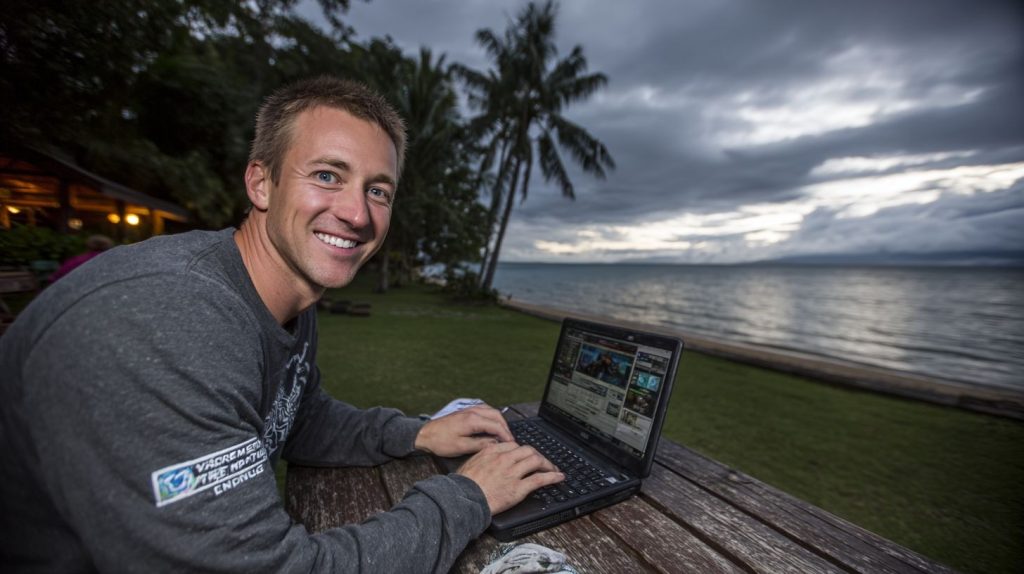
Remote support reps resolve 80% tickets on first contact earning $18-$40/hr. They handle queries via multiple channels for tech companies. This fits online jobs for nomads with reliable internet and VPN tools.
Tools include Zendesk ($49/agent), Intercom ($74/mo), and Help Scout ($20/user). Aim for <2hr response times and high CSAT scores. Channels break down as email (40%), chat (50%), and phone (10%).
Companies like Zapier, Buffer, and Groove value support-first cultures. Use cloud storage for ticket notes. Work from airport lounges or mountain retreats with flexible hours.
Train in tech support or product knowledge for efficiency. Time tracking apps monitor performance. This specialist role offers steady income in the global workforce.
Online Education and Coaching
The $315 billion online learning market fuels coaches earning $5k-$50k per month. This growth, up 900% since 2020 according to Coursera, creates prime opportunities for digital nomads seeking location independent work. Platforms like Udemy, Skillshare, and Coursera connect creators with global audiences.
Tutors and coaches thrive by offering flexible hours from beach offices or cafe workspaces. You can teach via Zoom while managing time zones with tools like World Time Buddy. This setup supports the laptop lifestyle with no commute and travel freedom.
Start by building niche expertise, such as language teaching or business mentoring. Use LinkedIn for client acquisition and YouTube for demos. Many nomads scale to passive income through course sales on these platforms.
Experts recommend starting small with one-on-one sessions before expanding. Reliable internet and VPN tools keep you connected in co-working spaces or during island hopping. This field offers borderless careers for solopreneurs.
Online Tutoring and Teaching
Tutors charge $25-$100/hr teaching via Zoom on Preply, which serves over 2 million students. Platforms like Preply, iTalki, and VIPKid make it easy to find students worldwide. Subjects include English at $20-50/hr, coding at $40-80/hr, and math at $30-60/hr.
Work 15-25 hours per week with flexible schedules that fit nomad life. Market yourself on LinkedIn and share YouTube demos of your teaching style. This attracts clients seeking personalized online jobs.
Focus on retention by offering consistent value, leading to monthly recurring students. Use productivity apps like Trello for lesson planning. Digital nomads enjoy cultural immersion while earning from anywhere.
Build a portfolio with student testimonials. Platforms handle payments, so you focus on delivery. This role suits language teachers and online tutors chasing work-life balance.
Course Creation and Selling
Course creators earn $97-$997 per sale on Teachable with 40% average margins. Platforms like Teachable (free to $119/mo), Thinkific, and Kajabi ($149/mo) simplify hosting. Create content in about 10 hours, plus 5 hours for tech setup.
Price courses at $197 for most sales, $497 for others, or $997 for premium. Build a funnel with a free lead magnet, email sequence, and sales page. This drives lifetime value around $597 per customer.
Nomads use Google Workspace for collaboration and async communication. Test ideas with small audiences on social media. Scale remotely as passive income streams grow.
Experts recommend niching down, like yoga instructor online or SEO specialist courses. Update content seasonally for repeat buyers. Enjoy perpetual traveler freedom with this online business model.
Life and Business Coaching
Coaches charge $200-$1k per session or $2k-$10k packages with 80% margins. Get certified through ICF programs costing $500-5k for credibility. Platforms like CoachAccountable ($20/mo) and Paperbell ($24/mo) handle scheduling and payments.
Package offerings as 6-week programs at $3k, 12-week at $7k, or VIP days at $2k. Acquire clients via webinars, applications, and discovery calls. One coach built a $20k/mo business this way.
Digital nomads manage teams virtually with Slack and Asana. Focus on niches like wellness coach or business coach for ex-pats. Time tracking apps ensure billable hours during van life or mountain retreats.
Build trust with case studies and client results. Use contract templates for smooth onboarding. This path offers high earnings and adventure travel for ethical freelancing pros.
E-commerce and Sales Opportunities
E-commerce nomads scale stores to $10k-$100k/mo profit using Shopify apps. The global e-commerce market supports low inventory models perfect for location independent work. Digital nomads run these businesses from beaches or cafes with minimal overhead.
Focus on dropshipping or print-on-demand to avoid stocking products. Use platforms like Shopify for quick setup and apps for automation. This fits the laptop lifestyle, allowing travel freedom while building passive income streams.
Marketing through Facebook Ads or Pinterest drives traffic to your store. Manage operations with tools like Trello for task tracking and Slack for virtual team communication. Many nomads combine this with freelance work for steady cash flow.
Legal setup includes forming an LLC for protection during your nomad life. Time zone management and reliable internet keep sales rolling from anywhere. Experts recommend starting small to test products before scaling remotely.
Dropshipping Store Owner
Dropshippers achieve 20-40% margins sourcing from AliExpress via Oberlo. Setup starts with Shopify ($29/mo) plus free Oberlo for product imports. Add Facebook Ads to launch your digital nomad venture quickly.
Product research tools like Sell The Trend ($39/mo) identify trending items. Build a sales funnel with TOFU videos, MOU ads, and direct checkout. Scale ad spend from $50/day to $500/day, then $5k/day as wins compound.
- Choose niches like fitness gear or pet accessories for repeat buyers.
- Test 10-20 products weekly using ad data.
- Automate fulfillment to focus on marketing from co-working spaces.
Form an LLC ($100-500) for liability protection in your borderless career. Use productivity apps like Asana for order tracking. This model supports solopreneurs chasing perpetual traveler dreams with flexible hours.
Print-on-Demand Business
POD sellers earn $5-$25 profit per t-shirt via Printful + Etsy integrations. Platforms like Printful, Printify, and Gelato handle printing and shipping. List on Etsy ($0.20/listing) or Redbubble for instant marketplaces.
Design with free tools like Canva or Placeit for custom graphics. Target niches by creating 100 designs, then scale the 10 winners. Marketing shines on Pinterest for traffic and Instagram influencers for reach.
- Pick themes like yoga quotes or travel motifs for nomad audiences.
- Optimize listings with SEO keywords for organic sales.
- Track performance in Google Workspace sheets.
One niche store hit $15k/mo focusing on eco-friendly apparel. Integrate with Shopify for your own branded site. This passive income stream fits van life or island hopping, with no inventory hassles.
Tools and Skills for Digital Nomads
Essential tools streamline nomad workflows from client management to secure internet. Digital nomads rely on these to maintain productivity in cafe workspaces or beach offices. They enable a laptop lifestyle across time zones.
Productivity apps like Trello and Asana help with project management for freelancers. Communication tools such as Slack and Zoom support async communication in global teams. VPN tools ensure reliable internet for location independent work.
Start with free tiers to test fit for your remote jobs. Combine tools for custom setups, like Zapier with Google Workspace. This setup supports work-life balance and travel freedom.
Skills matter too. Platforms build expertise in digital marketing or web development. Master them to thrive as a solopreneur or virtual assistant.
Must-Have Software and Apps
Automation tools and software for digital nomads keep workflows smooth. They handle repetitive tasks, freeing time for client acquisition or content creation. Pick based on your role, like copywriter or graphic designer.
| Tool | Price | Key Features | Best For | Pros/Cons |
| Notion | free-$10/mo | All-in-one workspace | Organization for teams/solopreneurs | Pros: Flexible; Cons: Learning curve |
| Superhuman | $30/mo | AI email management | Email power users like CEOs/execs | Pros: Speed; Cons: Pricey |
| ExpressVPN | $8.32/mo | Secure internet access | All nomads for privacy/security | Pros: Reliable; Cons: Speeds vary |
| Wise | free transfers | Multi-currency accounts | Finance and payments | Pros: Low fees; Cons: Limits |
| Calendly Pro | $12/mo | Automated scheduling | Client-facing coaches/consultants | Pros: Easy; Cons: Integrations needed |
| Zapier | $20/mo | No-code automation | Tech users for workflows | Pros: Versatile; Cons: Complex setups |
For project management, Notion suits flexible notes and databases, ideal for bloggers. Airtable offers spreadsheet-like structure for content writers tracking freelance work. Choose Notion for creativity, Airtable for data-heavy tasks like e-commerce store owners.
Integrate these with time tracking apps for invoicing. Digital nomads use them in co-working spaces worldwide. Test combinations to fit your nomad life.
Skill Development Platforms
Platforms like Udemy (200k+ courses) and Frontend Masters accelerate skills for remote work. They help web developers or SEO specialists build niche expertise. Focus on practical courses for quick application.
| Platform | Price | Courses | Completion Rate | Best For |
| Udemy | $15/course | 200k+ | 30% | Budget learners |
| Frontend Masters | $39/mo | Web dev focused | 80% | Professional devs |
| Skillshare | $32/mo | Creative skills | 40% | Designers |
| Coursera | $59/mo | Degree paths | 10% | Certifications |
| Pluralsight | $29/mo | Tech skills | 60% | Enterprise users |
Follow this 90-day skill mastery roadmap: Days 1-30, pick one platform and complete foundational courses in your field, like digital marketing. Days 31-60, build projects such as a portfolio site for UX designers. Days 61-90, apply skills on Upwork or Fiverr for real freelance work.
Experts recommend short, hands-on courses for digital nomads. Pair learning with digital nomad communities for feedback. This path supports passive income streams like online courses.
Practical Tips for Getting Started

Launch your nomad career in 90 days using proven client acquisition and portfolio strategies. Start by assessing your skills in areas like content writing or graphic design. This roadmap turns remote jobs into a location independent lifestyle.
Focus on niche expertise first, such as becoming a digital marketer for travel brands. Build a simple portfolio over one weekend. Then, target platforms like Upwork for your first clients.
Manage time zones with tools like Trello and World Time Buddy. Track expenses using apps for international banking. These steps ensure smooth execution of your laptop lifestyle.
Join digital nomad communities on Reddit or Nomad List for support. Practice async communication via Slack. This foundation supports work-life balance and travel freedom.
Building Your Portfolio
Create a portfolio converting 25% of visitors to clients using Carrd ($19/yr) one-pagers. Follow these steps to stand out in freelance work.
- Choose a niche: Options include SEO specialist for e-commerce, social media manager for coaches, or copywriter for SaaS products.
- Create 3 case studies: Use this template, “Challenge: [problem]. Solution: [your work]. Results: [client outcome].” Base them on personal projects if needed.
- Build your site with Carrd or Framer for a clean, mobile-friendly design showcasing your online jobs skills.
- Add testimonials, even from beta clients or free trials, like “Helped grow my audience by 30%.”
- SEO optimize with 3 keywords: your niche, “remote,” and “digital nomad.”
- Share on LinkedIn and Reddit communities for digital nomad jobs.
Complete this in 1 weekend. Avoid common mistakes like showing generic work without results metrics.
Finding Clients and Platforms
Secure your first $5k client within 30 days using Upwork (12% take rate) proposal templates. Compare platforms to match your remote work style.
| Platform | Take Rate | Best For |
| Upwork | 12% | Long-term contracts like web developer projects |
| Fiverr | 20% | Quick gigs such as video editing |
| 0% | Premium clients in digital marketing | |
| 0% | Niche communities for virtual assistants |
Use this 5-sentence Upwork proposal template: Sentence 1: Introduce your niche expertise. Sentence 2: Reference their job post specifically. Sentence 3: Share a relevant case study result. Sentence 4: Propose next steps like a quick call. Sentence 5: End with your rate and availability.
For LinkedIn DM script: “Hi [Name], I saw your post about needing a content writer. I helped [similar client] with engaging posts. Interested in chatting?” Target solopreneur needs in co-working spaces discussions.
Managing Finances and Taxes
Nomads save 20-40% on taxes using Wise + TaxAct while tracking with FreeAgent ($24/mo). Follow these steps for tax optimization in your borderless career.
- Set up a business structure like an LLC ($100-500) for liability protection.
- Use banking with Wise for multi-currency accounts and Capital One 360 for US fees.
- Handle invoicing via FreshBooks ($15/mo) with contract templates.
- Track deductibles like 85% of internet and co-working costs using expense apps.
- Research countries like Portugal NHR for 0% on foreign income, plus remote work visas.
For a simple tax savings calculator: Add monthly expenses (internet $50, co-working $200), multiply by 12, apply your tax rate, subtract deductibles. Experts recommend quarterly filings. This supports passive income streams alongside freelance gigs.
Frequently Asked Questions
What are Digital Nomad Jobs You Can Do From Anywhere?
Digital Nomad Jobs You Can Do From Anywhere are remote-friendly careers that allow you to work from any location with a stable internet connection, such as freelancing, online consulting, or content creation, enabling a location-independent lifestyle.
What are the best Digital Nomad Jobs You Can Do From Anywhere for beginners?
For beginners, top Digital Nomad Jobs You Can Do From Anywhere include virtual assistance, data entry, and social media management, as they require minimal experience and can be learned quickly through online platforms like Upwork or Fiverr.
How much can you earn from Digital Nomad Jobs You Can Do From Anywhere?
Earnings from Digital Nomad Jobs You Can Do From Anywhere vary widely; entry-level roles might pay $1,000-$3,000 monthly, while skilled positions like software development or copywriting can exceed $5,000-$10,000 per month, depending on experience and clients.
What skills do you need for Digital Nomad Jobs You Can Do From Anywhere?
Essential skills for Digital Nomad Jobs You Can Do From Anywhere include digital proficiency (e.g., Google Workspace, communication tools), self-discipline, time management, and niche expertise like coding, graphic design, or digital marketing.
How to find Digital Nomad Jobs You Can Do From Anywhere?
To find Digital Nomad Jobs You Can Do From Anywhere, use platforms like Remote.co, FlexJobs, LinkedIn, and We Work Remotely; build a strong portfolio on Behance or GitHub, network on nomad communities like Nomad List, and tailor your applications to highlight remote work experience.
What equipment is required for Digital Nomad Jobs You Can Do From Anywhere?
Basic equipment for Digital Nomad Jobs You Can Do From Anywhere includes a reliable laptop, high-speed internet (via mobile hotspots if needed), noise-cancelling headphones, and cloud storage; optional extras like a second monitor or ergonomic setup enhance productivity on the go.