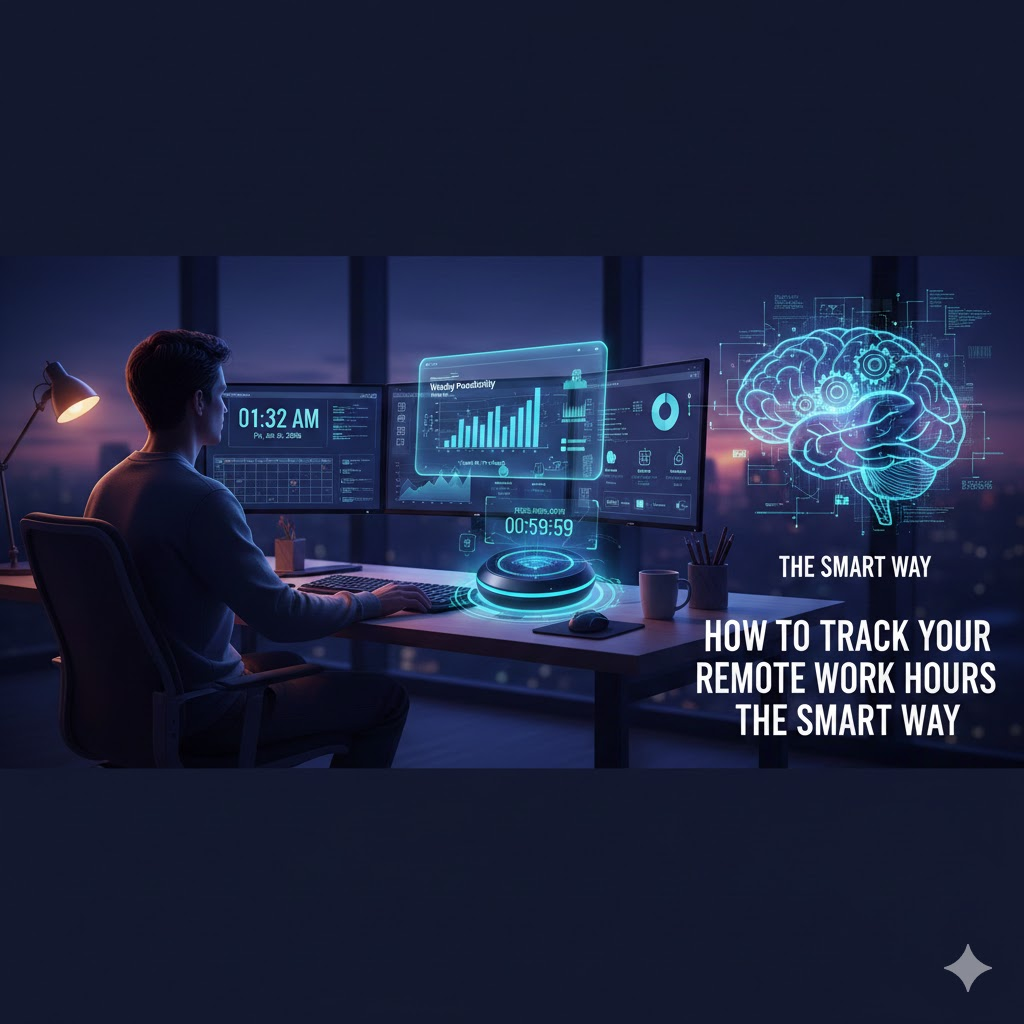
Working remotely offers flexibility and freedom, but it also comes with unique challenges. One of the biggest hurdles for remote workers is accurately tracking hours. Without a structured office environment, it’s easy to overwork, underwork, or lose track of how time is spent. Smart time tracking is essential for productivity, accountability, and maintaining work-life balance.
Here’s a detailed guide on how to track your remote work hours effectively and efficiently.
Why Tracking Hours Matters
1. Maintain Productivity
Knowing how much time you spend on tasks helps identify distractions and optimize workflow.
2. Ensure Accurate Billing
If you work as a freelancer or contractor, accurate time logs ensure you get paid for every hour worked.
3. Set Realistic Goals
Tracking hours helps in planning daily and weekly targets. You can allocate time realistically for projects.
4. Prevent Burnout
Remote workers often blur the line between work and personal life. Tracking helps set boundaries and ensures proper rest.
Methods for Tracking Remote Work Hours
There are several approaches depending on your needs, from simple manual logs to automated tools.
1. Manual Time Logs
How it works:
Write down start and end times for each task, either on paper or in a digital document.
Pros:
- Simple and low cost
- Flexible for personal tracking
Cons:
- Requires discipline
- Easy to forget or miscalculate
Tips:
- Note the task name, start time, end time, and breaks.
- Review daily to spot patterns or inefficiencies.
2. Spreadsheets
How it works:
Use Excel, Google Sheets, or Airtable to log your hours. Include columns for task, project, start time, end time, and total hours.
Pros:
- Easy to customize
- Can generate weekly summaries automatically
Cons:
- Manual entry still required
- Limited automation compared to dedicated tools
Tips:
- Use formulas to calculate total hours automatically.
- Color-code tasks to identify time-consuming activities.
3. Time Tracking Software
How it works:
Use dedicated apps to track hours automatically or manually. Many apps run in the background, logging time spent on specific tasks or applications.
Popular Tools:
- Toggl Track: Simple, intuitive, allows manual or automatic tracking with reports.
- Clockify: Free option, good for freelancers and teams, provides reports and billable hours.
- RescueTime: Automatically tracks computer usage, providing insights on productivity and distractions.
- Hubstaff: Tracks time, screenshots, and activity levels — ideal for remote teams.
Pros:
- Accurate and automated
- Generates detailed reports
- Can track multiple projects simultaneously
Cons:
- Some tools require subscriptions for advanced features
- May feel intrusive if over-monitored
4. Task-Based Tracking
How it works:
Instead of logging hours, track tasks and estimate time spent. You mark tasks as completed and record how long they took.
Pros:
- Focuses on productivity rather than just hours
- Easy to integrate with project management tools like Trello, Asana, or Notion
Cons:
- Estimates may be inaccurate
- Less precise for hourly billing
5. Pomodoro Technique
How it works:
Break work into focused intervals (usually 25 minutes) followed by short breaks. Track each interval as a unit of work.
Pros:
- Enhances focus and reduces burnout
- Naturally tracks time in blocks
- Encourages breaks and prevents fatigue
Cons:
- Less effective for tasks requiring uninterrupted deep work longer than one interval
Tips:
- Use apps like Focus Booster or TomatoTimer to automate Pomodoro tracking.
Best Practices for Smart Remote Time Tracking
- Track in Real-Time
Logging hours after the fact reduces accuracy. Start tracking as soon as you begin work. - Differentiate Between Productive and Idle Time
Identify which hours contribute to meaningful work versus distractions. - Review Weekly
Look at weekly summaries to see patterns, improve time allocation, and plan better. - Set Boundaries
Use tracked data to define work hours, preventing overwork and supporting work-life balance. - Use Reports for Accountability
Share time reports with clients or managers to demonstrate productivity and justify billing. - Combine Tools
Use spreadsheets for task summaries, and software for automated tracking — this combination provides both precision and context.
Tools That Make Tracking Easier
| Tool | Features | Ideal For |
| Toggl Track | Manual and automatic time tracking, reports, project tracking | Freelancers, small teams |
| Clockify | Free tier, billable hours, team tracking | Remote workers, agencies |
| RescueTime | Automatic activity tracking, productivity scoring | Self-motivated remote workers |
| Hubstaff | Time tracking with screenshots, payroll integration | Remote teams, managers |
| Focus Booster | Pomodoro timers, reports | Individuals wanting focus and time logging |
FAQ: Tracking Remote Work Hours
Do I really need to track my hours if I’m salaried?
Yes. Even salaried remote workers benefit from tracking hours to manage workload, improve productivity, and prevent burnout.
Can time tracking reduce flexibility?
Not necessarily. Modern tools allow you to track hours while maintaining freedom to work when and where you want.
How do I track hours for multiple projects?
Use project-specific tags in software or separate columns in spreadsheets. This helps generate detailed reports for each client or project.
How accurate are automatic trackers?
Automatic trackers are generally precise for computer-based tasks, but manual entries may still be needed for offline work.
How often should I review my tracked time?
Daily reviews are good for immediate adjustments, while weekly summaries help with planning and goal-setting.
Conclusion
Tracking remote work hours is more than just a way to ensure accurate payment. It is a productivity tool that helps you manage tasks, set boundaries, and maintain work-life balance. The key is to find a system that fits your workflow, whether it’s manual logging, spreadsheets, time tracking software, or task-based tracking.
By combining consistent tracking, weekly reviews, and smart tools, you can take control of your remote work hours, increase efficiency, and maintain mental well-being while working from anywhere.